
Losing a tooth or several puts you at a crossroads. There are real options on the table, and each one works differently, costs differently, and changes your daily life in different ways. The decision is worth taking seriously, and it helps to actually understand what you are comparing before sitting down with a dentist to talk numbers.
At Orange Blossom Dentistry in Orange Park, Dr. Jessica Nixon and Dr. Ryan Garske help patients navigate exactly this kind of decision every day. Our dental implants page outlines what the implant process looks like for our patients, but if you are still in the research phase and want a plain-language breakdown of all three options, this is a good place to start.
What Each Option Actually Is
Before comparing them, it helps to understand how each option works at a basic level.
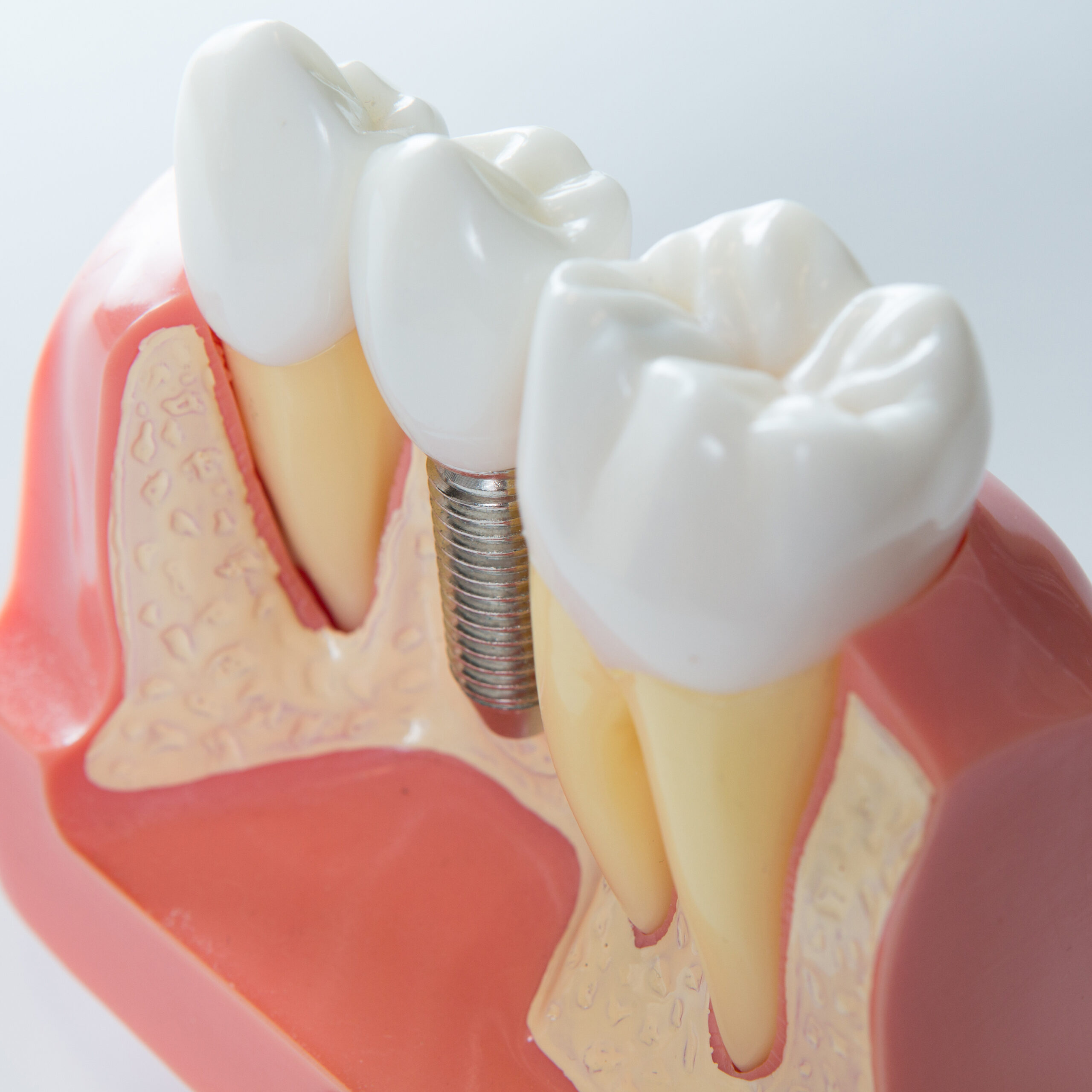
A dental implant is a titanium post that is surgically placed into the jawbone and topped with a custom crown. It acts like a natural tooth root, stimulating the bone when you chew. Over time, the implant fuses with the bone through a process called osseointegration, creating a strong, permanent foundation.
A dental bridge fills the gap left by a missing tooth by anchoring an artificial tooth to the natural teeth on either side of the space. Those adjacent teeth are filed down and fitted with dental crowns that hold the bridge in place. No surgery is involved, and the whole process typically wraps up in a few weeks.
Dentures are removable prosthetics. Full dentures replace an entire arch of missing teeth, while partial dentures fill in gaps when some natural teeth remain. They sit on the gums and can be taken out for cleaning and sleeping. They require no surgery and are generally the most affordable entry point for tooth replacement.
How They Compare on the Things That Matter Most
Implants have the strongest long-term track record. A 2024 meta-analysis published in PubMed Central reviewed 20 years of dental implant data and found survival rates exceeding 90% even after a decade, with follow-up research reflecting consistent durability across multiple study types. With proper care, many implants last for decades, and some last a lifetime.
Bridges typically last 5 to 15 years before needing replacement. Dentures usually require replacement every 7 to 10 years and may need periodic refitting as the jawbone shifts beneath them.
Bone health
This is one of the most significant differences between the options and one that does not get enough attention. Only implants replace the tooth root. That root stimulation is what tells the jawbone to keep renewing itself. When a tooth is lost and not replaced with an implant, the bone underneath begins to resorb over time. Bridges and dentures address the visible gap but do not stop the process.
For patients thinking long-term, especially those concerned about facial structure or the appearance of premature aging around the jaw, this distinction matters.
Impact on surrounding teeth
Bridges require permanently altering the two teeth on either side of the gap to serve as anchors. Filing down healthy enamel is irreversible. If those anchor teeth were otherwise in good shape, that is a real trade-off worth considering.
Implants stand entirely on their own. They place no burden on neighboring teeth and do not require any modification to adjacent tooth structure.
Dentures sit on the gum tissue. Partial dentures use clasps to grip nearby teeth, which can put some pressure on those teeth over time, particularly if the fit shifts.
Day-to-day life
Implants function the most like natural teeth. Most patients report eating, speaking, and caring for them the same way they would their original teeth. There is no removal for cleaning, no adhesive, and no adjustment period for speaking.
Bridges are fixed in place and feel more natural than dentures for most people. Cleaning between them requires a floss threader or water flosser to reach beneath the artificial tooth.
Dentures require a period of adjustment. They may shift or slip while eating or speaking, especially before the fit is dialed in. Many patients adapt well, but some never feel fully at ease with them.
Cost and insurance coverage
Dentures are generally the least expensive upfront. Bridges sit in the middle range. Implants cost more initially but tend to be more cost-effective over a 20-year period, given their durability and the fact that they rarely need replacement.
Insurance coverage varies widely. Bridges are more commonly covered under standard dental plans. Implant coverage has become more common but is not universal. Our team can help you understand what your plan covers and what financing options may be available, including CareCredit.
Who Tends to Be a Good Fit for Each Option
Not every patient is the right candidate for every option, and a thorough evaluation is always the starting point. That said, some general patterns hold:
- Implants tend to be a strong fit for patients with healthy bone density, good overall health, and a single or limited number of missing teeth who want the closest thing to their natural tooth.
- Bridges are often a practical choice when the teeth on either side of the gap already need crowns, or when a patient prefers to avoid surgery with a shorter treatment timeline.
- Dentures make sense for patients who need to replace multiple or all teeth, want a non-surgical option, or are working within a tighter budget.
These are starting points, not conclusions. The right answer depends on the specifics of your situation.
What to Expect When You Come In
At Orange Blossom Dentistry, Dr. Nixon and Dr. Garske take time to review what is actually going on in your mouth before making any recommendations. That means looking at bone density, the health of adjacent teeth, your overall health history, and what you are hoping to achieve. Dr. Nixon and Dr. Garske both trained at the University of Maryland School of Dentistry and have been treating patients in the Orange Park community for years.
We are an independent, family-owned practice, and that means your treatment plan is built around you, not around volume targets or one-size-fits-all protocols. If you are weighing your options for tooth replacement and want a straightforward conversation about what makes sense for your situation, we welcome you to schedule a consultation at our Orange Park office.